CONTACT
+90 552 577 53 73

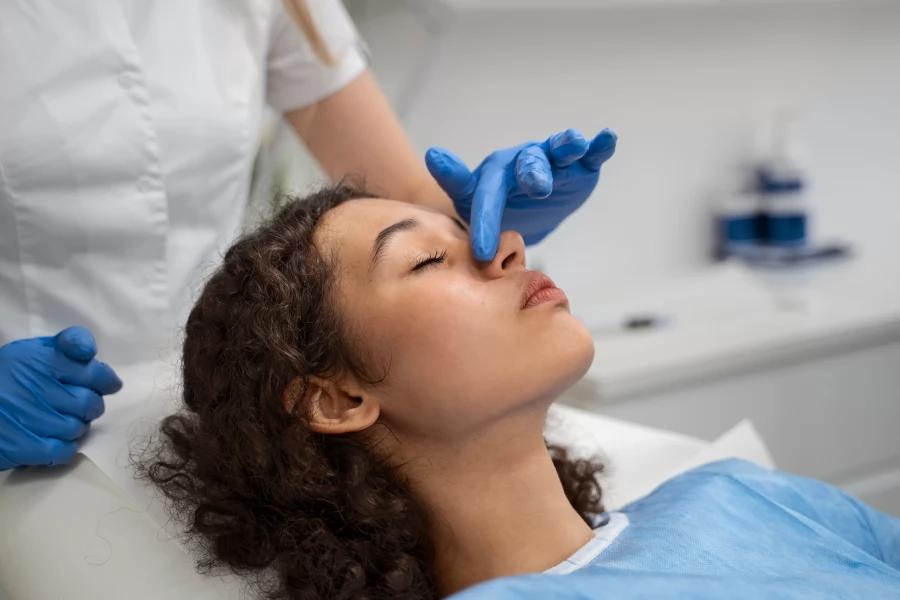
Are people on social media who warn others with statements like “Don’t Get a Nose Job!” really right, or do these claims stem from a lack of information?
In recent years, posts titled “Definitely Don’t Have Nose Surgery” that we frequently encounter on social media have caused many people to feel anxious. So, are those making these warnings truly right, or are these claims based on misinformation? When we closely examine the realities behind the false information circulating about rhinoplasty and the developments in this field, we see that the situation is quite different from what is assumed. Reactions against rhinoplasty surgeries are mostly based on negative experiences from the past; however, when modern medical advancements and the experience of specialist doctors are taken into account, how valid these approaches are under today’s conditions becomes questionable.
Rhinoplasty, known in medical terms as nose aesthetics, is a surgical procedure aimed at improving both the shape and function of the nose. This operation is performed not only for aesthetic concerns but also to address functional problems. Individuals with a prominent nasal hump, deformities at the nasal tip, asymmetry in the nostrils, or breathing difficulties can benefit from this surgery. Especially for patients who cannot breathe properly due to anatomical problems such as septal deviation, rhinoplasty offers both an aesthetic and functional solution.
Nose aesthetics is generally recommended for individuals who have completed nasal development, typically after the age of 18. This is because the nose continues to grow and develop before this age, and interventions performed earlier may lead to unexpected changes. Before surgery, the patient’s general health condition, expectations, and nasal anatomy are evaluated in detail. During this process, specialist doctors also consider factors such as facial structure, skin type, and lifestyle to prepare the most appropriate treatment plan. Patient selection and the surgeon’s experience are critical for a successful rhinoplasty operation.
Technological advancements in the field of nose surgery today have largely resolved many of the problems encountered in the past. Thanks to the closed rhinoplasty technique, in particular, suture marks are minimized and the recovery process is accelerated. In this method, all interventions are performed from inside the nose, leaving no visible external scars. Innovative techniques such as ultrasonic rhinoplasty allow bone and cartilage tissues to be shaped more precisely, significantly reducing postoperative swelling and bruising.
3D imaging systems allow patients to simulate their postoperative appearance before nose surgery, enabling healthier communication between the patient and the doctor. Piezoelectric surgical devices allow bones to be shaped in a more controlled manner while minimizing damage to surrounding tissues. Endoscopic techniques help visualize internal nasal structures more clearly, contributing to more effective resolution of functional problems. Thanks to these developments, surgery times are shortened, complication risks are reduced, and patient satisfaction increases.
The recovery process after a rhinoplasty surgery varies depending on the patient’s age, general health condition, and the technique used. During the first week, a nasal splint is placed on the nose, and patients must be careful during this period. Swelling and bruising are normal and usually subside significantly within two weeks. However, it can take about a year for the nose to fully take its final shape, as cartilage and bone tissues need time to remodel.
During the postoperative period, patients should avoid heavy lifting, intense sports, and activities that may cause trauma to the nose. Protecting the nose from sunlight, attending regular follow-up appointments, and strictly following the doctor’s recommendations help speed up recovery. In the first few months after surgery, nasal sensitivity increases, so caution is required in daily activities such as wearing glasses. Thanks to modern anesthesia techniques and preoperative preparation, pain control is effectively managed, allowing patients to experience a comfortable recovery period.
Like any surgical procedure, rhinoplasty carries certain risks; however, in experienced hands, these risks are kept to a minimum. The most common complications include temporary swelling, bruising, and numbness. Rarely, infection, bleeding, or anesthesia-related reactions may occur. Some patients may experience breathing difficulties after surgery, but this is usually temporary and can be resolved with appropriate treatment.
Situations that may require revision rhinoplasty include unmet patient expectations or unexpected developments during the healing process. Therefore, detailed preoperative evaluation and open communication between patient and doctor are critically important. With modern techniques, major complication rates are very low. The key is choosing an experienced specialist and thoroughly evaluating all risks before surgery. With proper patient selection and appropriate techniques, rhinoplasty can be performed as a safe and effective procedure.
The primary goal of modern nose surgery is to achieve aesthetic and functional improvements while preserving a natural appearance. Exaggerated changes seen in the past have given way to more conservative and personalized approaches. For this reason, specialist doctors plan procedures by considering details such as the patient’s facial structure, ethnic characteristics, and personal preferences. Anatomical details such as facial proportions, profile appearance, and frontal angles are carefully calculated.
New approaches such as preservation rhinoplasty aim to perform less invasive interventions by maintaining the nose’s natural support structures. These techniques offer faster recovery, less swelling, and more natural results. Ethnic rhinoplasty, on the other hand, takes into account anatomical characteristics specific to different ethnic groups. By acknowledging that each patient has unique anatomy and aesthetic expectations, personalized treatment plans are prepared instead of standard approaches. As a result, surgical outcomes appear more natural and patient satisfaction increases.
Choosing an expert doctor is the most critical factor for successful results in nose surgery. One of the leading names in this field in İzmir, Op. Dr. İbrahim Korhan inspires confidence in his patients with years of experience and continuously evolving technical knowledge. After completing his specialization training at the Department of Otolaryngology at Ege University Faculty of Medicine, he has gained extensive experience in various healthcare institutions, offering comprehensive expertise in the field of nose aesthetics.
Dr. İbrahim Korhan’s approach is based on the principle that every patient is unique, and accordingly, personalized treatment plans are prepared. Thanks to his expertise in the closed rhinoplasty technique, patients can undergo surgery without concerns about visible scars. The sincere communication he establishes with patients during the preoperative examination and planning process ensures that expectations are clearly defined. In his clinic equipped with modern techniques and technological devices, both aesthetic and functional outcomes are targeted. With his patient-centered approach and meticulous postoperative follow-up, he offers a reliable choice in the field of nose surgery.